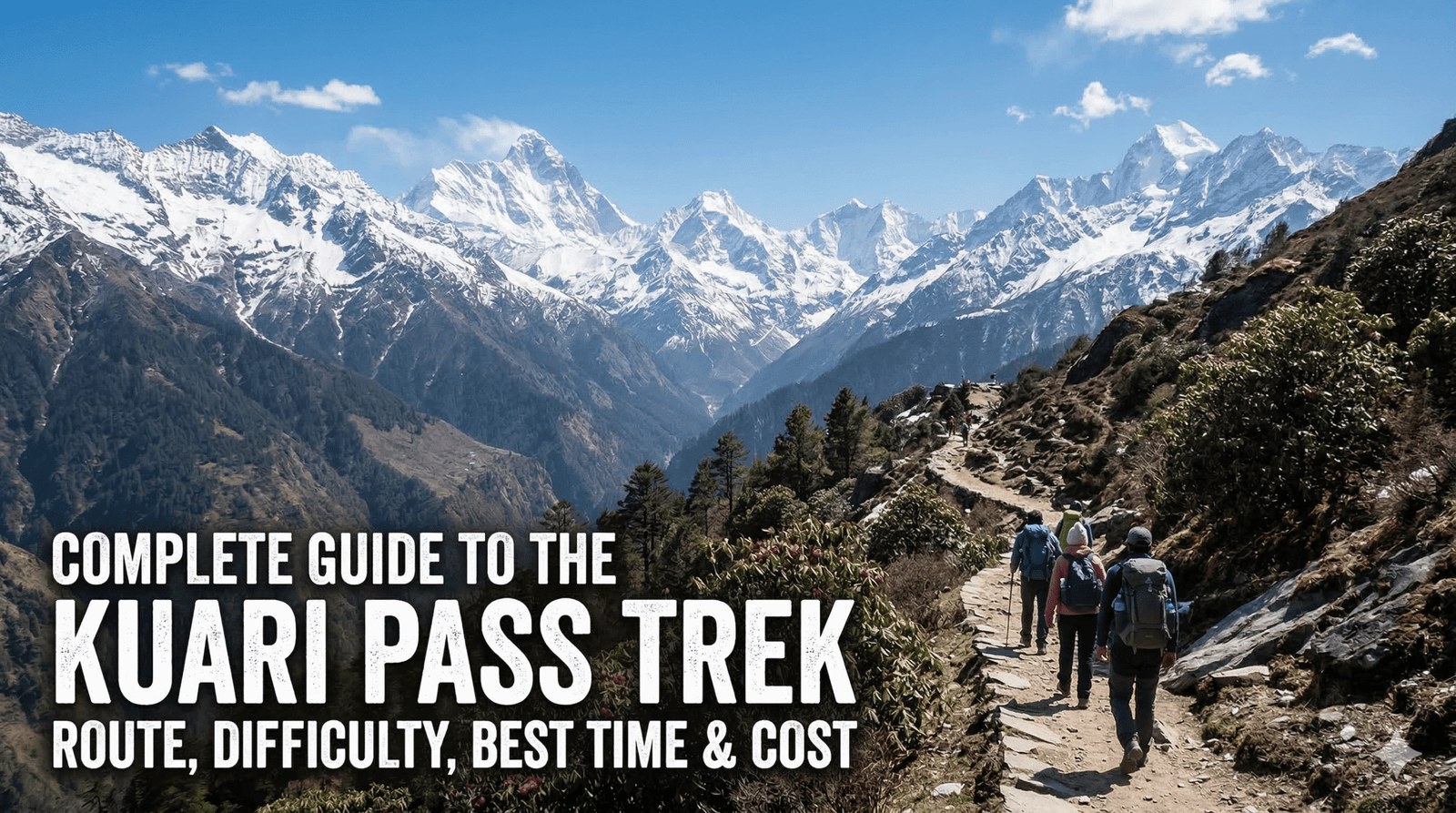
At 3,640 metres above sea level, tucked deep in the Garhwal Himalayas of Uttarakhand, the Kuari Pass stands as one of India’s most magnificent trekking destinations. It commands a panoramic view so breathtaking that Lord Curzon – the Viceroy of British India who first explored this route in 1905 – was reportedly left speechless by what he saw from the top. Over a century later, trekkers from across India and around the world still make the same journey, still reach that same ridge, and still stand in the same stunned silence.
The Kuari Pass Trek – also known as the Curzon Trail – is not the highest trek in India, nor the most technically demanding. But it consistently ranks among the most rewarding. In a single five-day journey, you walk through dense oak and rhododendron forests, cross ancient shepherd trails, camp in high-altitude meadows blanketed with snow, and wake up every morning to unobstructed views of some of the Himalayas’ most iconic peaks – Nanda Devi, Dronagiri, Kamet, Chaukhamba, Hathi Parbat, and Trishul – arranged in a wall of white that stretches across the entire horizon.
At FreeSoul Adventures, the Kuari Pass Trek is one of our most loved and most booked expeditions – and for good reason. We have guided hundreds of trekkers to that summit ridge, from first-timers taking their first steps above 3,000 metres to seasoned Himalayan explorers returning for the views they cannot stop thinking about. Our local expertise, experienced guides, and carefully designed itinerary ensure that every trekker who sets out with FreeSoul Adventures reaches the pass safely, comfortably, and with memories that last a lifetime.
This is your complete guide to the Kuari Pass Trek – covering our detailed day-by-day itinerary, difficulty assessment, best season to go, what it costs, what to pack, and everything you need to know before you book.
Quick Overview: Kuari Pass Trek at a Glance
| Detail | Information |
|---|---|
| Trek Location | Chamoli District, Uttarakhand |
| Starting and Ending Point | Rishikesh |
| Base Village | Karchi (near Joshimath) |
| Maximum Altitude | 3,640 m (Kuari Pass) |
| Trek Duration | 5 Days |
| Total Trek Distance | Approximately 28-32 km |
| Difficulty Level | Moderate |
| Best Season | October – November and March – May |
| Nearest Airport | Jolly Grant Airport, Dehradun (260 km) |
| Nearest Railway Station | Rishikesh (starting point) |
| Permit Required | Yes – Forest Department permit |
| Ideal For | Beginners with fitness, intermediate trekkers |
| Organised By | FreeSoul Adventures |
Why the Kuari Pass Trek Belongs on Every Trekker’s List
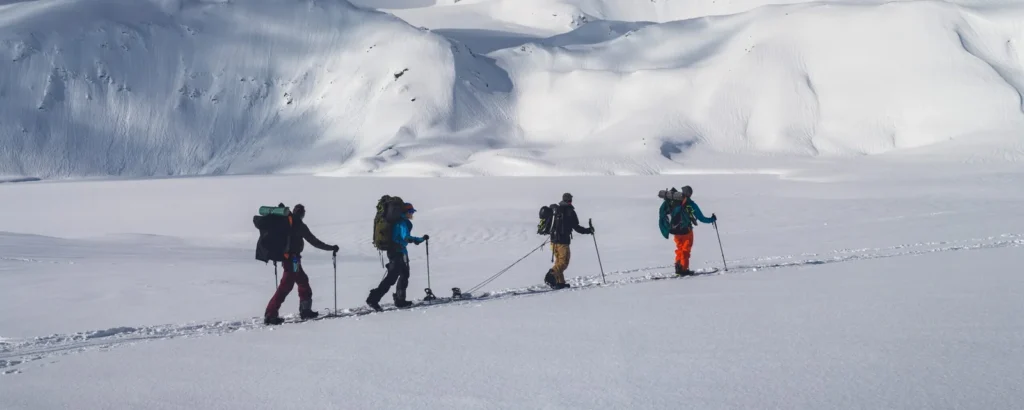
Before getting into the logistics, it is worth understanding what makes the Kuari Pass Trek special – because there are hundreds of Himalayan treks, and they are not all equal in what they offer.
The Himalayan panorama is genuinely unmatched. Most Himalayan treks offer glimpses of one or two major peaks. The Kuari Pass offers a continuous 180-degree arc of peaks spanning over 300 kilometres of the Garhwal and Kumaon Himalayas. Nanda Devi – India’s highest entirely domestic peak at 7,816 metres – dominates the view. But it is flanked by Dronagiri, Kamet, Mana Peak, Nilgiri Parbat, Hathi Parbat, Bethartoli Himal, and Trishul in a display that experienced mountaineers describe as the finest viewpoint in the Indian Himalayas.
The trail diversity is exceptional. Unlike many high-altitude treks that are predominantly rocky or barren, the Kuari Pass trail passes through four distinct ecological zones – subtropical forests, temperate oak-rhododendron forests, alpine meadows (bugyals), and high-altitude snowfields. In spring, the rhododendron forests blaze red and pink. In autumn, the oak forests turn gold. Each season offers a completely different visual experience on the same route.
The difficulty level is accessible without being easy. The Kuari Pass Trek sits at the upper end of the moderate category. It requires genuine cardiovascular fitness and multi-day trekking stamina – but does not require any technical climbing skills, rope work, or prior Himalayan experience. This makes it an ideal first high-altitude trek for fit beginners and a deeply satisfying route for experienced trekkers who want scenery over challenge.
The cultural experience is rich. The villages along the trail – Karchi, Joshimath, and the ancient Garhwali settlements along the route – are living communities with centuries of history. The temples, the mountain architecture, and the warm hospitality of local people add a human dimension to the trek that purely wilderness routes lack.
At FreeSoul Adventures, we believe the Kuari Pass is one of those rare treks where the journey is just as memorable as the destination. Our guides are local Garhwali experts who know every turn of this trail – and that local knowledge transforms a good trek into an unforgettable one.
FreeSoul Adventures Kuari Pass Trek Itinerary (5 Days)
Day 1: Rishikesh to Karchi (Joshimath) – 1,890 m
Drive Distance: Approximately 255 km | Estimated Drive Time: 8-9 hours
Your Kuari Pass Trek adventure with FreeSoul Adventures begins in Rishikesh – the yoga capital of the world and the traditional gateway to the Garhwal Himalayas. Early morning departure from Rishikesh allows you to make the most of the long but spectacular drive through the Alaknanda River valley.
The drive itself is a Himalayan introduction. From Rishikesh, the road winds through increasingly dramatic terrain – past Devprayag, the sacred confluence of the Bhagirathi and Alaknanda rivers, through Rudraprayag and Karnaprayag, past Chamoli and Pipalkoti, before the final climb up to the Joshimath area. Every hour of the drive brings bigger mountains and deeper gorges into view. By the time you reach the Joshimath valley, the scale of the Himalayan landscape is already beginning to impress.
Your FreeSoul Adventures team will meet you with a fully equipped vehicle from Rishikesh. Throughout the drive, your trek leader will brief you on the days ahead – the route, altitude expectations, safety protocols, and what to watch for on the trail. This is also your opportunity to ask any questions and make sure your gear is ready before the trek begins.
On arrival at Karchi – the small village near Joshimath that serves as our trek base – you will check into comfortable guesthouse accommodation arranged by FreeSoul Adventures. The evening includes a hot welcome dinner, a detailed trek briefing covering the five-day itinerary, equipment check, and an early night. Rest is essential – Day 2 begins your ascent into the Himalayas.
Altitude: 1,890 m Travel: Road journey from Rishikesh Accommodation: Guesthouse at Karchi Meals: Dinner included FreeSoul Adventures Tip: Drink at least 2-3 litres of water during the drive. Hydration begins before the trek – not after.
Day 2: Karchi to Khullara Campsite – 3,550 m
Trek Distance: 12-14 km | Estimated Time: 6-7 hours | Altitude Gain: 1,660 m
This is the day your trek truly begins – and it is a long, rewarding, and genuinely beautiful day of walking. From Karchi, the FreeSoul Adventures team sets out early, typically by 6:30-7:00 AM, to make full use of the daylight and cooler morning temperatures.
The first section of the trail climbs steadily through terraced farmland and small Garhwali settlements. The scent of pine and rhododendron fills the air as the trail enters dense forest, and the sound of the valley below gradually fades. The forest trail is well-defined but continuously upward – this section demands steady, paced walking. Our guides always advise the same thing: slow is smooth, smooth is fast. There is no benefit to rushing at altitude.
As you gain elevation, the forest character changes – the broad-leaved oak and horse chestnut of the lower slopes give way to taller conifers and then to the high rhododendron belt that defines the middle elevations of the Kuari Pass trail. In spring (April-May), this section is one of the most spectacular sights in Uttarakhand trekking – rhododendron trees reaching 10-12 metres in height, their canopies an unbroken blaze of deep red and bright pink against the blue Himalayan sky.
The trail continues ascending through increasingly open terrain until the forest thins and the first high meadows appear. The final push to Khullara climbs through open alpine terrain with sweeping views opening up behind you – the valley far below, the ridges of the middle Himalayas in the distance, and if the day is clear, the first glimpses of the high snow peaks to the north and east.
Khullara campsite, at 3,550 metres, is one of the finest camping locations on any Uttarakhand trek. Set on a broad open ridge with almost no tree cover above, it delivers a 180-degree view of the high Himalayas that is genuinely jaw-dropping – particularly at golden hour, when the peaks turn amber and rose in the fading light. The FreeSoul Adventures camp team will have your tents, hot tea, and a full dinner ready on arrival.
Temperatures at Khullara drop sharply after sunset – expect 0 to -5°C on October nights, colder in November. Ensure your sleeping bag and thermal layers are accessible in your tent before the temperature drops.
Altitude: 3,550 m Trek Distance: 12-14 km Accommodation: FreeSoul Adventures campsite (tents) Meals: Breakfast, lunch, dinner Key Highlights: Rhododendron and oak forest, upper bugyals, first full Himalayan panorama FreeSoul Adventures Tip: Take the ascent slowly and rest whenever your breathing becomes laboured. The altitude gain today is significant – pacing yourself protects your summit day tomorrow.
Day 3: Khullara to Kuari Pass (3,640 m) and Back to Khullara – 3,550 m
Trek Distance: 6-8 km (round trip) | Estimated Time: 5-6 hours | Altitude Gain/Loss: +90 m to pass, return to camp
Summit day. The day every trekker on the Kuari Pass circuit has been building toward since Rishikesh.
FreeSoul Adventures sets an early departure from Khullara – typically 6:00-6:30 AM. Starting early is not arbitrary: the morning hours before 10-11 AM consistently deliver the clearest visibility on the Kuari Pass. By midday, cloud often begins building around the higher peaks, softening or obscuring the panorama. Every minute of that pre-noon window at the top is worth the early alarm.
From Khullara, the trail traverses along the open ridge before making the final push to the pass. Since Khullara sits at 3,550 metres and the Kuari Pass stands at 3,640 metres, the altitude gain today is modest – just 90 metres. But the trail involves a steep, narrow section in the final approach, particularly challenging under snow cover. Your FreeSoul Adventures guide will lead the team across this section carefully, using the correct footing technique and, where needed, assisting trekkers through the steeper pitches.
And then, quite suddenly, you are there.
The Kuari Pass is a narrow saddle on a high ridge between two valleys. There is no gradual reveal – you step over the lip of the pass and the entire Himalayan panorama opens in front of you in a single, overwhelming instant. Nanda Devi (7,816 m) – India’s highest peak visible from Indian soil – commands the eastern horizon, its twin summits unmistakable. Flanking it in an unbroken chain are Dronagiri (7,110 m), Kamet (7,756 m), Chaukhamba (7,138 m), Nilgiri Parbat (6,474 m), Hathi Parbat (6,727 m), and Trishul (7,120 m). On a clear day, the panorama stretches for over 300 kilometres of the Garhwal and Kumaon Himalayas.
Most trekkers spend 45-60 minutes at the pass. Some stand in silence. Some cry. Some immediately start planning their return. The FreeSoul Adventures team carries hot ginger tea to the summit – a small gesture that feels extraordinary at 3,640 metres with the Himalayas spread before you.
The return to Khullara follows the same route – downhill now, which is easier on the lungs but demands care on the steeper sections. Back at camp by early afternoon, the rest of the day is yours to rest, photograph, and absorb the quiet of the high Himalayas. Our camp team will have a warm lunch waiting and a well-earned hot dinner to close the evening.
Altitude: 3,640 m (summit), return to 3,550 m (Khullara) Trek Distance: 6-8 km round trip Accommodation: FreeSoul Adventures campsite at Khullara (tents) Meals: Breakfast, packed lunch at summit, dinner Key Highlights: Kuari Pass summit, full 180-degree Himalayan panorama, Nanda Devi view FreeSoul Adventures Tip: Carry your camera fully charged and in an inside pocket – cold temperatures drain batteries rapidly at altitude. A power bank in your jacket pocket can save a summit photo opportunity.
Day 4: Khullara to Karchi (Joshimath) – 1,890 m
Trek Distance: 12-14 km | Estimated Time: 5-6 hours | Altitude Loss: 1,660 m
The descent day. After the high drama of summit day, Day 4 is about coming down gently and safely – retracing the trail from Khullara back through the forest to Karchi.
Descending 1,660 metres in a single day is physically demanding in a different way from the ascent. The continuous downhill places significant stress on the knees and quadriceps – particularly after two days of mountain walking. Trekking poles are strongly recommended for this stage and can dramatically reduce the impact load on your joints.
The descent through the rhododendron and oak forest is beautiful in both spring and autumn – the same forest that was climbed in the morning light on Day 2 now appears in the softer afternoon tones of descent, and many trekkers find that going down offers a completely different visual perspective of the same trail.
The FreeSoul Adventures team descends together at a pace that keeps everyone comfortable and safe. Your guide will remind you to walk heel-to-toe on steep sections, take regular rest breaks to let your legs recover, and pace the descent to avoid rushing on potentially slippery terrain.
On reaching Karchi, you return to the same guesthouse from Day 1. A hot shower – the first since Rishikesh – feels absolutely extraordinary after three days on the mountain. The FreeSoul Adventures team celebrates the day with a group dinner, certificate distribution, and an evening of shared stories from the trek.
Altitude: Return to 1,890 m Trek Distance: 12-14 km Accommodation: Guesthouse at Karchi Meals: Breakfast, lunch, dinner Key Highlights: Forest descent, return to lower altitude, celebration dinner FreeSoul Adventures Tip: Take your time on the descent – your knees will thank you. Rushing downhill is the most common cause of trek injuries.
Day 5: Karchi to Rishikesh
Drive Distance: Approximately 255 km | Estimated Drive Time: 8-9 hours
The final day is primarily a travel day – the long drive back through the Alaknanda valley to Rishikesh, retracing the same spectacular road that brought you into the mountains four days ago.
Departure from Karchi is typically after an early breakfast – aiming for a 6:30-7:00 AM start to ensure comfortable arrival in Rishikesh by evening. The FreeSoul Adventures vehicle covers the return journey with the same comfort and care as the drive up.
The drive back is quieter than the drive in. Most trekkers spend the journey looking out at the mountains they have just been standing on – processing the experience, going through photographs, and already discussing when they will come back. The Devprayag and Rudraprayag confluence stops on the return route make for beautiful last glimpses of Uttarakhand’s river country before the plains approach.
FreeSoul Adventures drops all trekkers at their designated points in Rishikesh, completing a full circle from where the adventure began five days ago. Our team will remain available for any post-trek support, feedback, or to help you plan your next adventure with us.
Travel: Road journey to Rishikesh Meals: Breakfast included Drop-off: Rishikesh (as per booking details) FreeSoul Adventures Tip: Book your onward train or flight from Rishikesh/Haridwar for the evening of Day 5 or morning of Day 6 to give yourself comfortable buffer time for the return drive.
Difficulty Assessment: Is the Kuari Pass Trek Right for You?
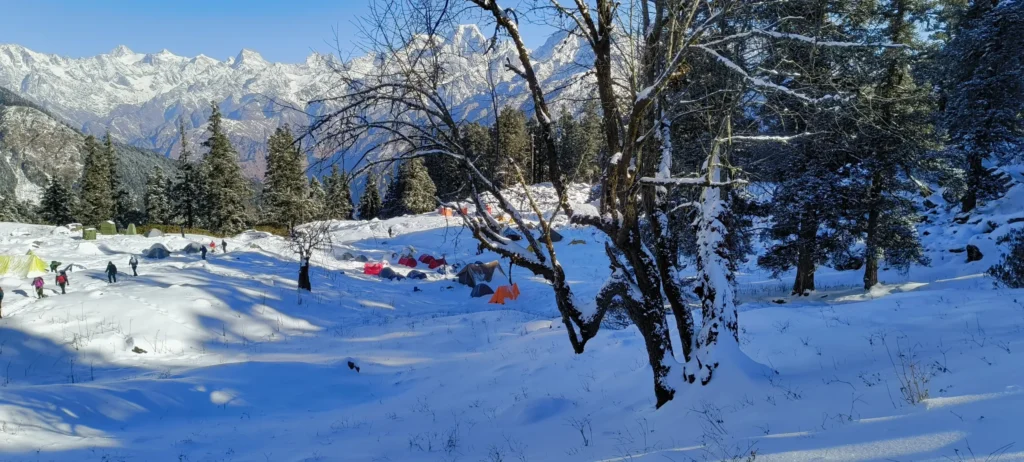
Overall Difficulty Rating: Moderate
The FreeSoul Adventures Kuari Pass Trek is rated moderate – genuinely accessible to fit beginners but demanding enough to require real preparation. Here is a detailed breakdown of what to expect physically.
What Makes It Challenging
Altitude. The maximum altitude of 3,640 metres means your body receives approximately 30% less oxygen per breath than at sea level. This affects energy levels, sleep quality, and appetite. AMS (Acute Mountain Sickness) is a real risk above 3,000 metres – which is why the FreeSoul Adventures itinerary is designed with controlled ascent rates and our guides are trained to identify and respond to AMS symptoms at every stage.
Day 2 ascent load. The climb from Karchi (1,890 m) to Khullara (3,550 m) in a single day – a gain of 1,660 metres over 12-14 km – is the most demanding day of the trek. It requires sustained uphill effort for 6-7 hours. Pacing, hydration, and nutrition management on Day 2 directly determines how you feel on summit day.
Day 4 descent load. Descending 1,660 metres in a single day places intense strain on the knees and quadriceps. Trekking poles are non-negotiable for this stage and the FreeSoul Adventures team carries basic first aid supplies including anti-inflammatory medication.
Cold temperatures. Nighttime temperatures at Khullara camp fall between -5°C and -10°C in October-November. Cold camping requires the right gear – sleeping bags and thermal layers that are genuinely rated for these temperatures, not urban camping equivalents.
Fitness Requirements
To comfortably complete the FreeSoul Adventures Kuari Pass Trek, you should be able to:
- Walk 12-14 km continuously on varied terrain
- Climb 400-500 metres of elevation in a single session without stopping frequently
- Carry a daypack of 8-10 kg for 6-7 hours
- Sustain physical activity across 3 consecutive trekking days
Recommended pre-trek training (minimum 4-6 weeks before departure):
- 45-60 minutes of cardio (running, cycling, stair climbing) 4-5 days per week
- Incline treadmill or stair sessions specifically to build leg and lung capacity for uphill walking
- Weekend hikes of 10-15 km with a loaded daypack to simulate trail conditions
- Leg strengthening exercises – squats, lunges, and step-ups – to prepare specifically for the Day 4 descent
Who Should Not Attempt This Trek
- Individuals with uncontrolled hypertension or cardiac conditions
- Those with severe respiratory conditions such as asthma or COPD
- Pregnant women
- Children under 10 years without prior trekking experience
- Anyone recovering from recent surgery or serious illness
If you have any medical queries about your suitability for the Kuari Pass Trek, the FreeSoul Adventures team is happy to discuss your specific situation before you book.
Best Time to Do the Kuari Pass Trek
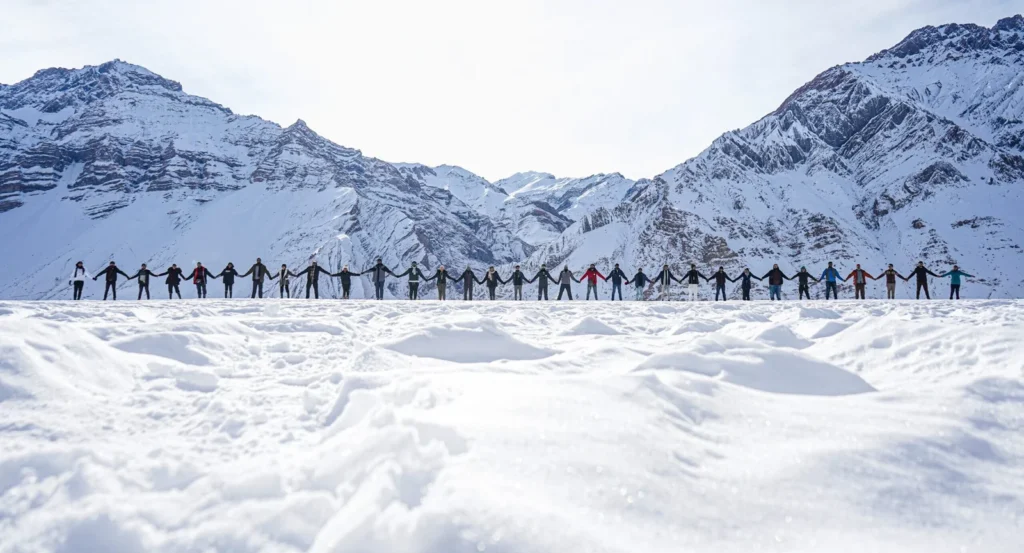
Season 1: April – June (Spring)
This is the most visually spectacular season for the Kuari Pass Trek. Rhododendron forests are in full bloom through April and into May – the trail’s lower and middle sections become corridors of red and pink colour. Snow on the upper sections has consolidated by April and is walkable, while May and June offer fully clear, snow-free trails. Daytime temperatures are pleasant (15-20°C at lower elevations) and nights at Khullara are cold but manageable (-2 to +2°C in May).
FreeSoul Adventures runs its peak spring departures in April and May – these slots fill quickly and early booking is strongly recommended.
Season 2: October – November (Post-Monsoon Autumn)
October is widely regarded as the finest month for the Kuari Pass Trek. The monsoon has cleared the air completely, delivering crystal-clear visibility that can extend to peaks over 100 kilometres away. The oak forests have turned golden and amber. Fresh snow dusts the high peaks. Days are warm and sunny; nights at Khullara are cold and brilliantly starlit.
November brings deeper cold and early snowfall at altitude. The trek remains accessible through mid-November but demands heavier cold-weather gear. FreeSoul Adventures closes Kuari Pass departures by late November as winter snowfall makes the upper trail hazardous.
Seasons to Avoid
July – September (Monsoon): FreeSoul Adventures does not operate Kuari Pass treks during the monsoon. Heavy rainfall causes landslides on approach roads, makes trails dangerously slippery, and obscures all mountain views. Safety is always our first priority.
December – March (Winter): The Kuari Pass trail is under heavy snow and inaccessible for standard trekking. Winter specialist variants are possible but require advanced mountaineering gear and experience beyond our standard Kuari Pass program.
Kuari Pass Trek Cost: What Is Included with FreeSoul Adventures
Package Pricing
FreeSoul Adventures offers the Kuari Pass Trek as a fully inclusive package. Our pricing is transparent – no hidden costs, no surprise additions on trek.
| Package Type | Cost Per Person | Ideal For |
|---|---|---|
| Standard Group Trek | Rs. 8,500 – Rs. 11,000 | Groups of 6-15 trekkers |
| Small Group Trek | Rs. 12,000 – Rs. 14,000 | Groups of 2-5 trekkers |
| Private/Custom Trek | Rs. 16,000 – Rs. 20,000 | Solo or custom itineraries |
Prices vary by season and group size. Contact FreeSoul Adventures for current pricing and available departure dates.
What Is Included in the FreeSoul Adventures Package
- Return transport from Rishikesh to Karchi (Joshimath) and back
- Guesthouse accommodation at Karchi on Day 1 and Day 4
- All camping accommodation on trekking nights (Days 2 and 3)
- All meals from Day 1 dinner to Day 5 breakfast
- Experienced FreeSoul Adventures trek leader and assistant guide
- Full camp support staff (cook, camp helpers)
- High-quality camping equipment (tents, sleeping mats, dining tent, kitchen tent)
- Mule support for all group equipment and supplies
- Forest Department trekking permit
- First aid kit and emergency oxygen cylinder at high camp
- FreeSoul Adventures trek completion certificate
What Is Not Included
- Personal trekking gear and clothing
- Personal porter (available at additional Rs. 800-1,200/day on request)
- Travel insurance (strongly recommended – available on request)
- Any personal expenses, tips, or souvenirs
- Costs arising from medical evacuation or emergency situations
Total Budget Estimate Per Person
| Item | Estimated Cost |
|---|---|
| FreeSoul Adventures trek package | Rs. 10,000 |
| Train/bus to and from Rishikesh | Rs. 1,500 – 3,000 |
| Personal trekking gear (if purchasing) | Rs. 3,000 – 8,000 |
| Gear rental (jacket, sleeping bag, poles) | Rs. 500 – 800/day |
| Personal expenses and tips | Rs. 1,500 – 2,000 |
| Total per person (approx.) | Rs. 17,000 – 24,000 |
Packing List: What to Carry on the Kuari Pass Trek
Packing correctly is as important as physical preparation. The right gear is the difference between a comfortable, joyful experience and a cold, difficult one. Use this FreeSoul Adventures packing guide to prepare fully.
Clothing
Base Layer
- Thermal top and bottom (2 sets) – merino wool or synthetic moisture-wicking only. No cotton under any circumstances – cotton retains moisture and causes dangerous heat loss when wet.
- Moisture-wicking trekking t-shirts (3-4)
- Trekking trousers (2 pairs) – quick-dry synthetic
Mid Layer
- Fleece jacket or mid-layer pullover (1-2)
- Down or synthetic insulated jacket – your most important garment at Khullara camp. Minimum 600-fill power down or synthetic equivalent. This is non-negotiable for October and November treks.
Outer Layer
- Waterproof and windproof hardshell jacket
- Waterproof over-trousers
Extremities
- Warm fleece or wool gloves (1 pair) + waterproof outer gloves (1 pair)
- Wool or fleece hat covering ears
- Balaclava or neck gaiter
- Thick trekking socks – wool or synthetic (4-5 pairs)
- Liner socks (2-3 pairs)
Footwear
- Waterproof ankle-support trekking boots – broken in before the trek. Do not attempt a Himalayan trek in new boots.
- Camp shoes or lightweight sandals for evenings
- Gaiters for snow sections and wet trail
Equipment and Gear
Essential Equipment
- Trekking poles – strongly recommended, especially for the Day 4 descent
- Headlamp with spare batteries
- Daypack (25-35 litres) – you carry this daily
- Sleeping bag rated to -10°C minimum
- Sleeping bag liner (adds 3-5°C warmth, keeps bag clean)
Safety and Health
- Personal first aid kit with blister plasters, bandages, and paracetamol
- Diamox (acetazolamide) – consult your doctor before the trek
- ORS (Oral Rehydration Salts) sachets – minimum 10
- Sunscreen SPF 50+ – UV exposure at altitude is extreme
- Lip balm with SPF
- Sunglasses with UV400 protection – snow blindness is a real risk above 3,000 m
Hydration and Nutrition
- Water bottles (2 x 1 litre) or 2-litre hydration bladder
- Water purification tablets or filter
- High-energy trail snacks: nuts, dried fruits, energy bars, dark chocolate (minimum 500 calories/day beyond meals)
- Electrolyte sachets
Documents and Miscellaneous
- Government-issued photo ID (Aadhaar/passport) – mandatory for permits and checkposts
- Power bank (minimum 2 x 10,000 mAh) – no charging points at high camp
- Ziplock bags for waterproofing electronics and documents
- Biodegradable soap and toiletries – regular products are prohibited in the forest reserve area
- Wet wipes (invaluable at high camp when water access is limited)
What NOT to Carry
- Any cotton clothing
- Denim or jeans
- More than one extra pair of shoes
- Single-use plastic (banned in the Nanda Devi Biosphere Reserve area – FreeSoul Adventures operates a strict zero-plastic-waste policy on all treks)
- Excessive electronics beyond what you will genuinely use
Altitude Sickness: Prevention and Response
AMS is the most serious health risk on the Kuari Pass Trek. All FreeSoul Adventures trek leaders are trained in wilderness first aid and AMS recognition and response. Our team carries emergency oxygen at high camp on every departure.
Prevention:
- Follow the FreeSoul Adventures itinerary – the ascent rate is designed for safe acclimatisation
- Drink 3-4 litres of water daily throughout the trek
- Avoid alcohol for the first 2-3 days
- Eat well even if altitude suppresses your appetite
- Consult your doctor about Diamox prophylaxis before departure
Recognise AMS symptoms:
- Persistent headache not relieved by paracetamol
- Nausea, vomiting, or loss of appetite
- Dizziness or loss of coordination
- Fatigue disproportionate to effort
- Difficulty sleeping
FreeSoul Adventures response protocol:
- No trekker ascends further with active AMS symptoms – this is a non-negotiable safety rule
- Mild AMS: rest at current altitude, increase hydration, monitor closely
- Moderate AMS: descend immediately with guide support
- Severe AMS: emergency descent and evacuation. Our guides carry emergency oxygen and have direct contacts with local helicopter evacuation services.
Frequently Asked Questions
Is the Kuari Pass Trek suitable for first-timers? Yes – the FreeSoul Adventures Kuari Pass Trek is one of our most recommended first high-altitude treks for fit beginners. The itinerary is designed for manageable daily distances, the maximum altitude of 3,640 metres is approachable with proper preparation, and our experienced guides provide support at every step. Physical fitness and 4-6 weeks of pre-trek training are the essential prerequisites.
Is snow guaranteed on the trek? In October-November and March-April, snow at Khullara camp and on the approach to Kuari Pass is very likely. The pass itself almost always has some snow cover in these months. In May-June, the lower trail is snow-free but the pass may retain patches. FreeSoul Adventures always provides trekkers with an updated snow conditions report before departure.
How cold does it get at Khullara camp? In October, nighttime temperatures at Khullara (3,550 m) typically fall between -5°C and -10°C. A sleeping bag rated to -10°C is mandatory. FreeSoul Adventures provides high-quality 4-season tents for all Khullara camp nights – if you need sleeping bag rental, our team can arrange it in Rishikesh before departure.
Can I do this trek solo without a guide? While the trail is marked, solo trekking above 3,000 metres in the Himalayas carries real risks – including navigation errors in poor visibility, medical emergencies without support, and unpredictable weather. FreeSoul Adventures strongly recommends trekking with a professional guide. Our team’s local expertise, emergency protocols, and camp support make a significant difference to both safety and experience quality.
What is the best way to reach Rishikesh for the trek? From Delhi, the most convenient option is an overnight train to Haridwar (approximately 5-6 hours on the Shatabdi or Jan Shatabdi Express), followed by a 45-minute taxi to Rishikesh. Direct buses from Delhi’s ISBT Kashmere Gate to Rishikesh are also available (approximately 6-7 hours). FreeSoul Adventures can assist with travel planning on request.
How do I book the Kuari Pass Trek with FreeSoul Adventures? Visit the FreeSoul Adventures website to view available departure dates, check current pricing, and complete your booking online. Our team responds to all booking enquiries within 24 hours and provides a full pre-trek information pack on confirmation.
Why Trek with FreeSoul Adventures
The Kuari Pass is not a trek you want to do twice because something went wrong the first time. At FreeSoul Adventures, we have built our reputation on getting it right the first time – with guides who know this trail in every season, camp teams who make high-altitude nights genuinely comfortable, safety systems that cover every emergency scenario, and a genuine passion for sharing the Himalayas with people who are experiencing them for the first time.
Our Kuari Pass Trek is not just a product on a booking page. It is a carefully designed five-day experience built around the moments that matter – the silence of the forest on Day 2 morning, the first sight of the full Himalayan panorama from Khullara at sunset, the sharp cold and quiet anticipation of the summit morning, and the overwhelming view from Kuari Pass that no photograph ever quite captures.
Nanda Devi rising in the east. The endless white chain of the Garhwal Himalayas stretching north and west. The silence of a world removed from everything below.
That moment is waiting for you. FreeSoul Adventures will take you there.
Book your Kuari Pass Trek with FreeSoul Adventures today.